Five Days, 30+ Countries: KingPower Belt at the 140th Canton Fair
Phase 1 of the 140th Canton Fair closed on October 19, and our team has spent the days since sorting sample requests and sending out quotations. While the trip is still fresh, here’s a straight recap of what we brought, who we met, and what five days of face-to-face talks told us about where the market is heading.
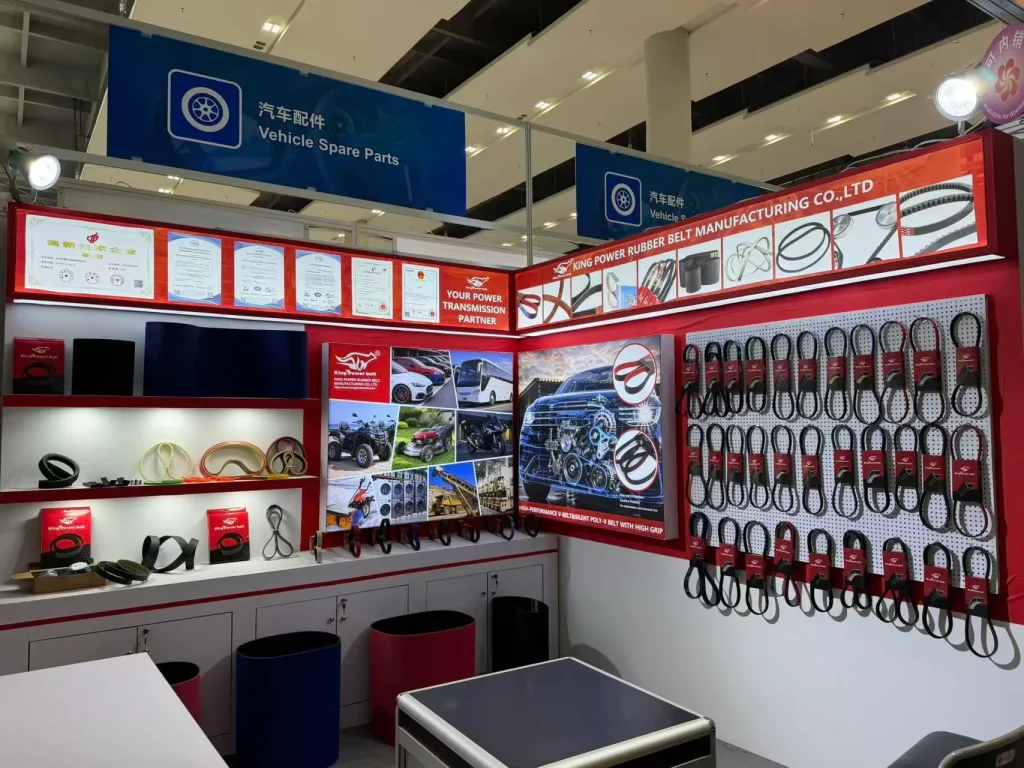
Our booth: Vehicle Spare Parts section, 11.3M01
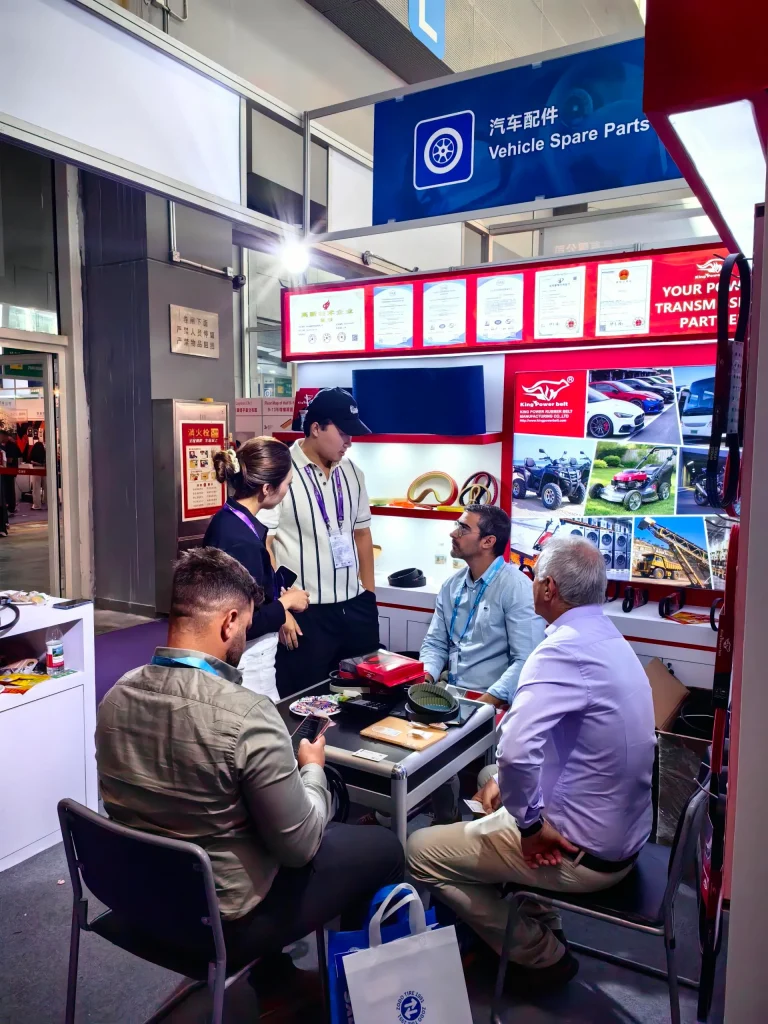
The Fair keeps automotive belt and parts exhibitors in one area, which means the buyers walking past are the ones who actually know belts — distributors building their own brands, wholesalers filling containers, and a steady stream of repair-channel purchasers.
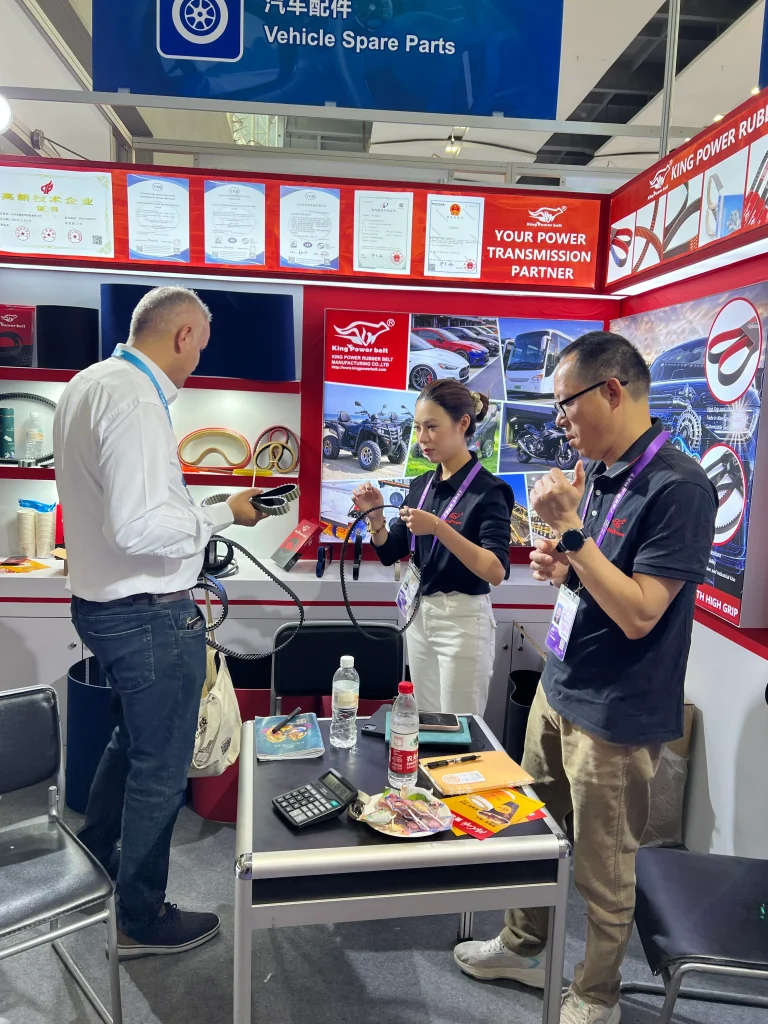
This red booth was the most carefully designed one we’ve brought to the Fair. One wall carried the full KingPower drive belt range end to end. The opposite wall held our certificates and engine-application charts — ISO 9001, IATF 16949 and ISO 14001 front and center. There’s a reason we put them there: by the time a serious buyer reaches the back wall, the questions are always the same two — how good is your quality, and what equipment do these belts actually fit?
What we exhibited
This trip we led with the core of our automotive drive-belt line:
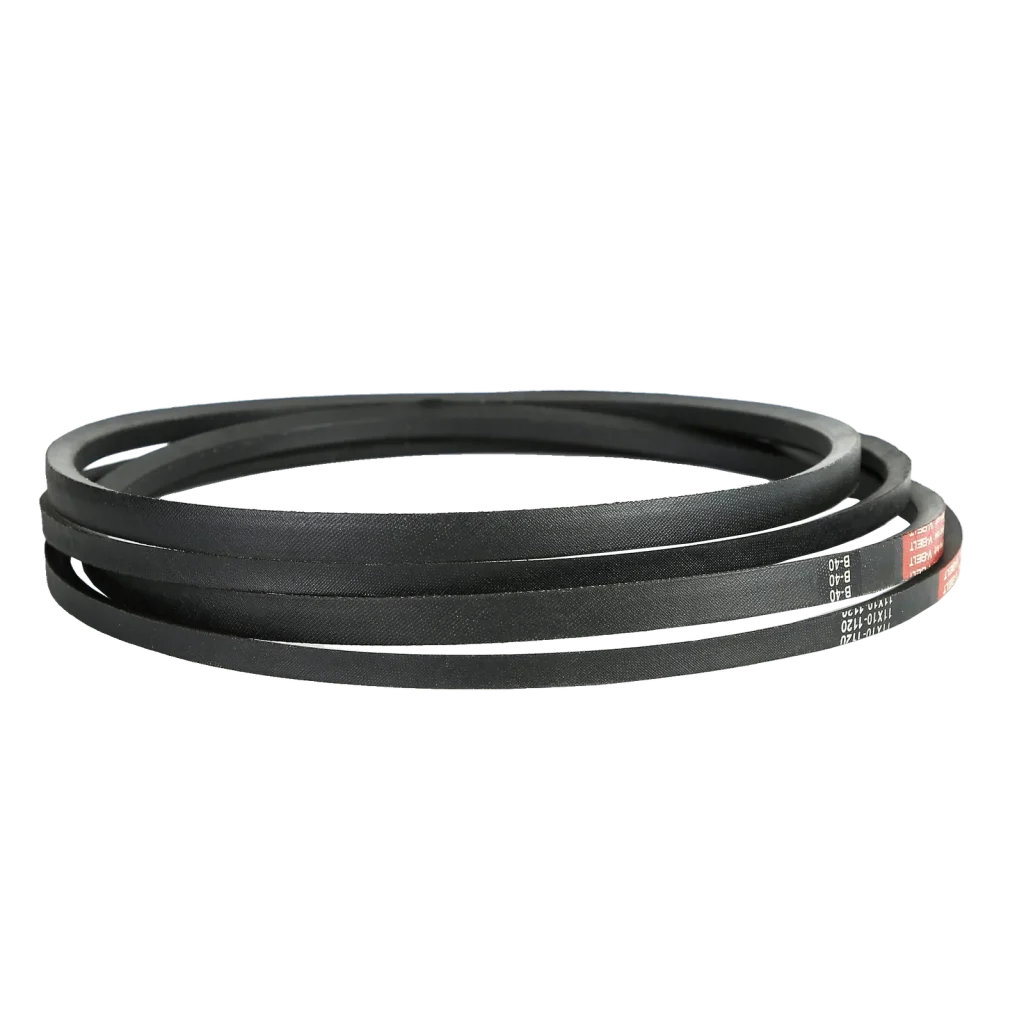
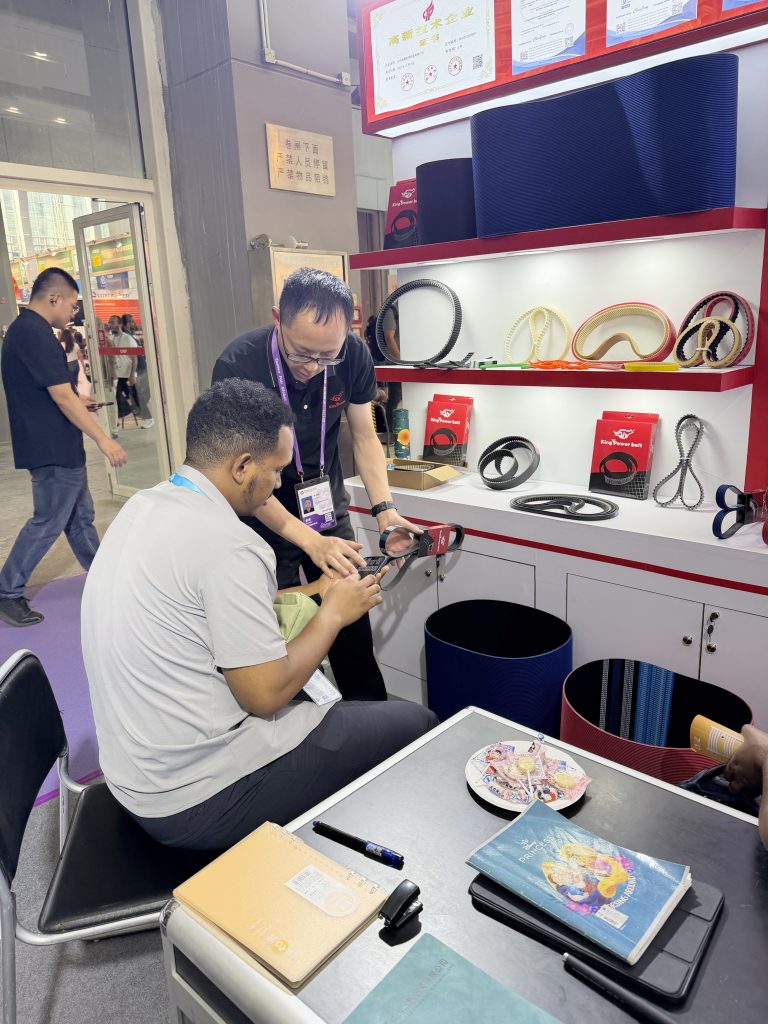
V-belts — the series we have the deepest production experience in. Wrapped and raw-edge cogged (toothed) constructions, covering passenger cars, light trucks and agricultural machinery.
Poly-V (PK) belts — our best-selling, most-promoted series, and the one buyers asked about most. We run a world-leading one-piece molding process for this range, offer it in several colors, and build it for high-precision, high-end equipment. It’s also the series that drew the most inquiries at the booth.
Timing belts — another flagship series; a large share of visitors asked us for a quote on these.
Application coverage — passenger cars, ATVs, agricultural machines and industrial drives, matched by OEM part number, sample or vehicle model.
A wall full of finished belts does more convincing than any brochure. Buyers ran a thumb down the ribs of a poly-V belt, flexed the teeth of a raw-edge V-belt, then turned it over to study the backing card and barcode layout — and those are exactly the details that decide whether a belt can carry someone else’s brand onto a retail shelf.
Five days, 30+ countries
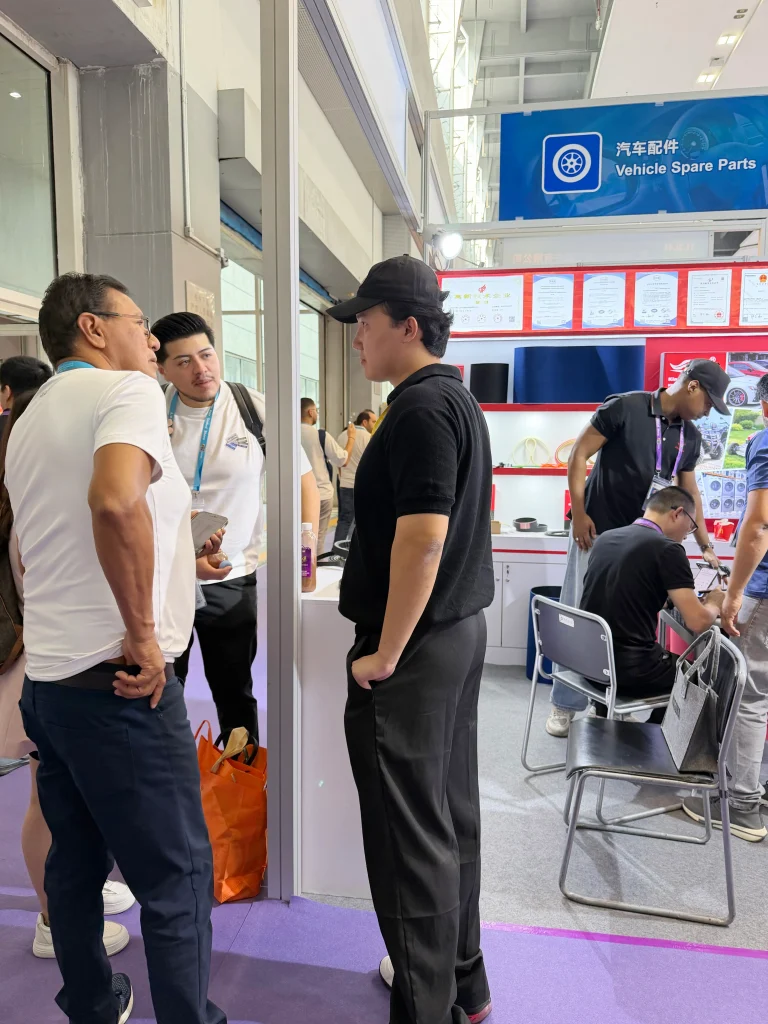
Over five days, buyers from more than 30 countries came through our booth: South America, the Middle East, Southeast Asia, Africa, Eastern Europe. As at every Canton Fair, familiar faces made up a good part of the crowd — a few distributors we’ve worked with for years stopped by and sat down to walk through next season’s order list in person.
The signal from the market was consistent: order batches are getting smaller and more frequent, and buyers are asking harder, more detailed questions about lead times. Nobody wants a container of one belt number sitting in a warehouse. They want a supplier who can mix a container, ship fast, and hold quality steady. That is exactly the structural advantage of our factory — compounding, cord treatment, forming and curing/finishing all done in-house in Taizhou — and hearing it confirmed by customers face to face is what makes it feel real.
The questions buyers asked most
Can we put our own brand on them? Yes. OEM / private-label production is a big part of what we do — packaging, backing cards and barcodes can all carry the customer’s brand, with low minimum order quantities.
What’s the normal lead time? For repeat items in existing molds, we usually ship 25–35 days after order confirmation, depending on season. Mixed-container orders are routine for us.
Do you still keep molds for older vehicle models? Mostly, yes. A sizable share of our business is belts for models the OEM stopped making years ago but which are still running the streets of Africa, the Middle East and South America.
Can you send samples before we order? Yes — and this time quite a few buyers left the booth with sample belts in hand instead of waiting on a courier.
Missed us in Guangzhou?
The Fair is over, but the conversation doesn’t have to stop. Our full range is at junweiparts.com, and our team usually returns an inquiry with part-number matching and a quotation within one working day.
Whether you met us at booth 11.3M01 or just found this page through a search, the next step is the same: send us the part numbers or the application, and we’ll come back with a concrete offer.
Q: Where was KingPower Belt’s booth at the 140th Canton Fair? A: Booth 11.3M01, in the Vehicle Spare Parts section, Phase 1 (October 15–19, 2026).
Q: What products did KingPower exhibit at Canton Fair 2026? A: Poly-V (PK) belts, V-belts and timing belts, covering passenger cars, ATVs, agricultural machinery and industrial applications.
Q: Does KingPower offer private-label belt production? A: Yes — packaging, backing cards and barcodes can carry the customer’s brand, with low minimum order quantities.
Q: Which certifications does KingPower hold? A: ISO 9001, IATF 16949 and ISO 14001, with REACH/RoHS material compliance available on request.
 23 OctFive Days, 30+ Countries: KingPower Belt at the 140th Canton FairKingPower Belt exhibited at the 140th Canton Fair (Oct 15–19, 2026), booth 11.3M01. See our poly-V, V-belt and timing belt range and what 30+ countries' buyers asked.Read More
 16 OctKingPower at the 140th Canton Fair: Day 2 From Booth 11.3M01Day 2 recap from KingPower's booth 11.3M01 at the 140th Canton Fair: automotive V-belts, timing belts & PK belts on show, plus how to meet us in Guangzhou.Read More
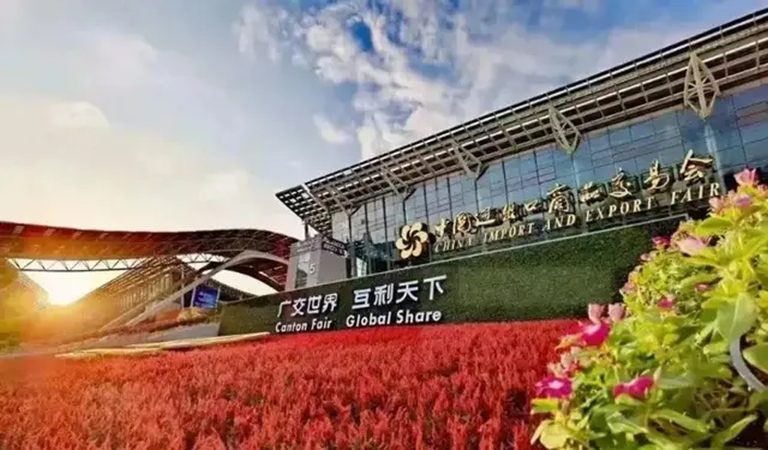 29 SepMeet KingPower at the 140th Canton Fair — Booth 11.3M01Visit KingPower Belt at the 140th Canton Fair, Oct 15-19 2026, Booth 11.3M01, Guangzhou. V-belts, timing belts, poly-V belts and OEM supply direct from our factory.Read More