
A PK belt cracking on a running line is one of those failures that looks small until it isn't. The belt itself costs a few dollars. The hour your line sits still, the technician you pull off another job, and the shipment that leaves late are the real price. If the same belt has been replaced two or three times and it keeps going, the problem was never the model number. It was how the belt was built.
What a "PK belt" actually is
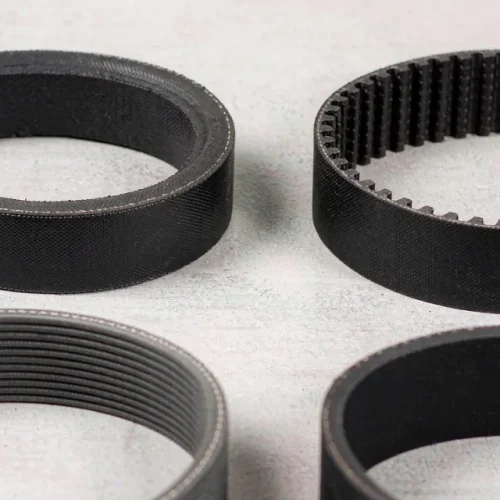
PK is a profile code, not a brand. It describes a multi-ribbed belt (also called a Poly-V or serpentine belt) where many small V-ribs run lengthwise along a single backing. "PK" specifically means a rib pitch of 3.56 mm and a rib angle of roughly 40 degrees. It is the size you will find on almost every automotive front-end accessory drive (FEAD) and on plenty of industrial machines. Smaller PJ belts (2.34 mm pitch) show up in appliances and light equipment; larger PL belts (4.7 mm pitch) carry heavier loads.
The appeal is simple: one belt wraps several pulleys and drives the alternator, water pump, air-conditioning compressor, and power steering off a single path. Because the ribs are thin, the belt bends tightly around small pulleys without losing grip. That same thin-rib geometry is also where the trouble starts when the belt is built the wrong way.
Why PK belts crack and slip
These are two different problems with two different causes, and mixing them up is how people keep buying the wrong fix.
Cracking
Cracking is almost always a story about heat and age. In an engine bay the belt bakes at well over 100°C for years, and ozone plus the occasional oil leak finish the job. The rubber hardens, loses stretch, and fine cracks open along the edges of the ribs. A belt that was poorly made comes into the world with cut rib edges that are already the weak spot, so it cracks early. Wrong tension makes it worse: too tight and the cords fatigue, too loose and it slips and overheats (more on that below).
Slippage
Slippage is usually tension, contamination, or mismatch. The belt is under-tensioned, there is oil or grease on the pulley, the rib surface has worn smooth, the pulleys are misaligned, or the drive is simply asked to carry more than it was sized for. The dangerous part is the loop it creates: a slipping belt runs hotter, and heat is exactly what drives the cracking you were trying to avoid.
The usual fix that doesn't work
Most teams reach for the obvious move: swap the belt and move on. But if a sound belt fails again in a few months, the part number was rarely the issue. The weak points are baked in during manufacturing, and no amount of re-ordering the same item changes that.
Before you blame the belt, check the basics: correct tension, clean and aligned pulleys, and the right size. A good belt on a badly set-up drive will still fail. Fix the drive first, then fix the belt.
Layered build vs one-piece molding
Here is the part that actually matters. There are two broad ways a PK belt gets its ribs, and they are not equal.
The conventional way: build flat, then grind the ribs
A common older method builds the belt as a flat slab (rubber + tension cords + fabric), vulcanizes it, then grinds or cuts the rib profile into the backing. Grinding gets the shape close, but it leaves a few problems:
- The rib edges are cut surfaces, not molded ones, so they are rougher and more likely to start cracking.
- Tolerances on rib angle and pitch run looser, so the belt does not seat perfectly on the pulley and is more prone to slip and vibrate.
- Any secondary bonding between layers is a place delamination can begin after repeated bending and heat.
The one-piece way: form the ribs in the mold
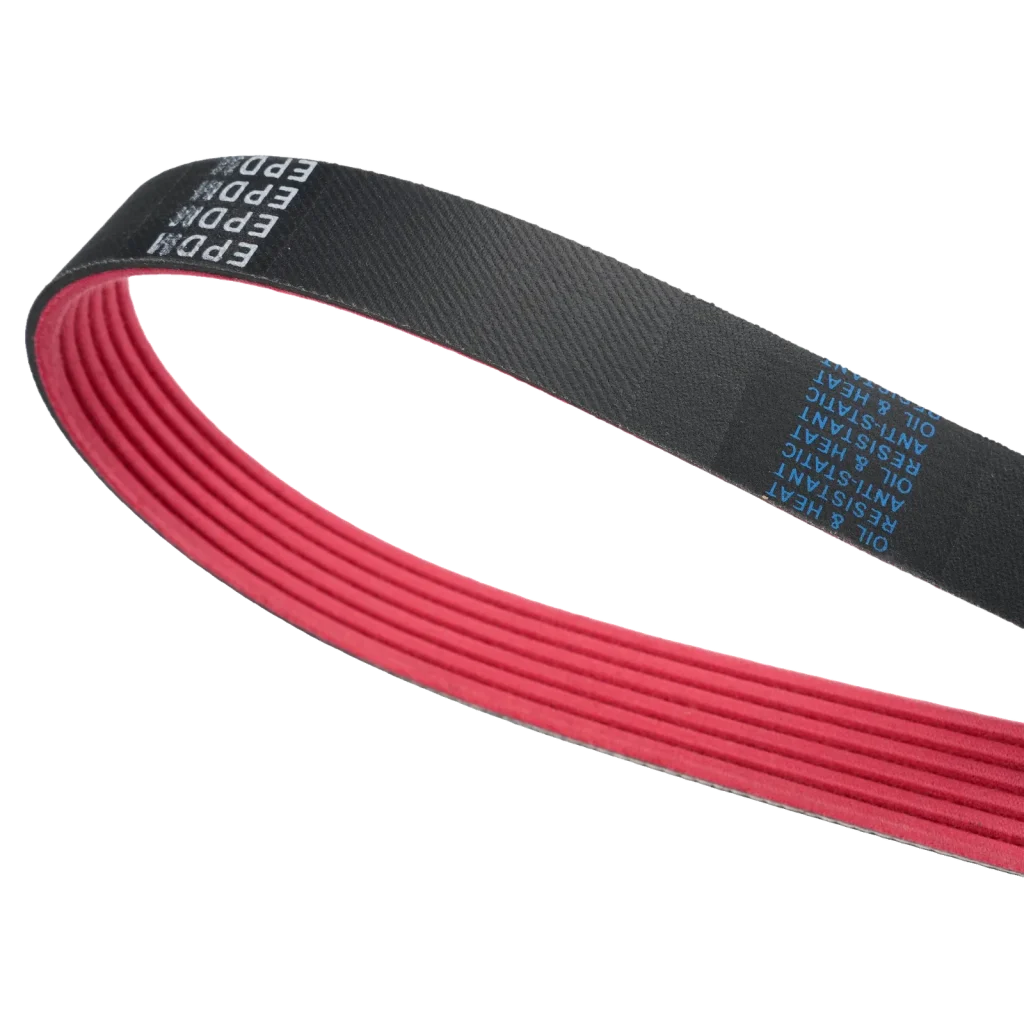
One-piece (sometimes called unibody or compression) molding loads the compound and the cords into a precision mold and cures the whole belt in a single shot. The ribs are formed, not cut. That single change removes the weak points:
- No cut rib edges, so there is no ready-made line for cracks to follow.
- The cords sit evenly through the body, so tension is uniform instead of concentrated.
- Rib dimensions stay consistent, so the belt fits the pulley cleanly and does not slip.
- There is no secondary bonding layer to delaminate.
You can feel the difference on the bench. Bend a conventionally ground belt sharply and you will often see fine cracks open along the rib edges; bend a one-piece molded belt the same way and it stays smooth. (That is a quick shop-floor check, not a substitute for a proper fatigue test rig, where real belt life is measured under load.)
The materials that make it last
The build method gets most of the attention, but the rubber and cords do the rest of the work.
- EPDM rubber is the standard for under-hood belts. It resists heat, ozone, and oil far better than natural or neoprene rubber, and a typical compound is good for roughly 120°C of continuous service, with some formulations rated a bit higher for short peaks. That is why it dominates automotive FEAD belts.
- Cords carry the load. Polyester is the common all-round choice; fiberglass is low-stretch and stiff; aramid is the strongest and lowest-stretch option but costs more. The right cord is the one that matches your load and speed, not the most expensive one.
- A fabric cover on the ribs adds abrasion resistance and keeps friction stable on the pulley.
Where colored / custom PK belts fit in
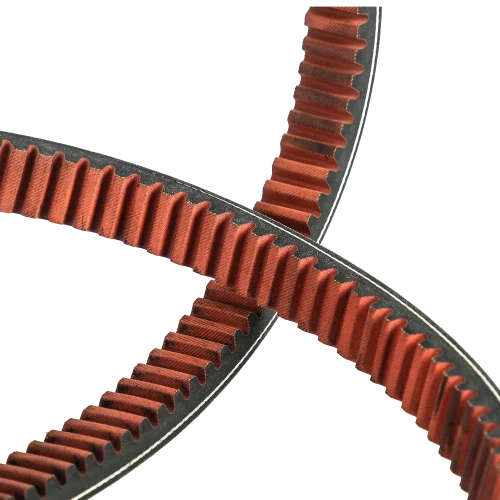
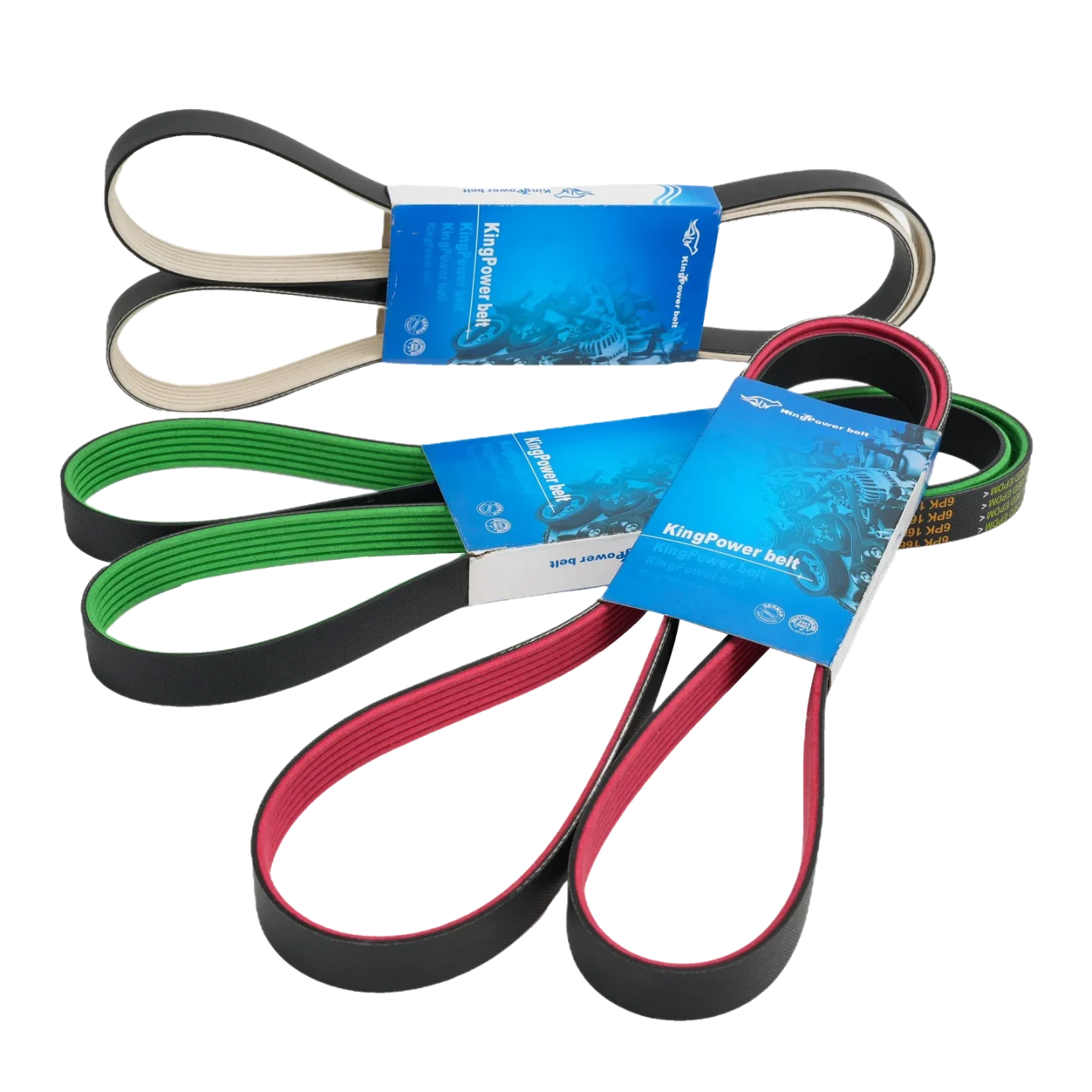
Not every PK belt is plain black. Custom-colored belts (think a black backing with red, green, or beige rib surfaces) are used for automotive tuning, brand identification, and OEM color-coded replacement programs, where a belt has to be matched by sight on a crowded engine. They are made the same way, with the color in the rib compound rather than a coating that would wear off.
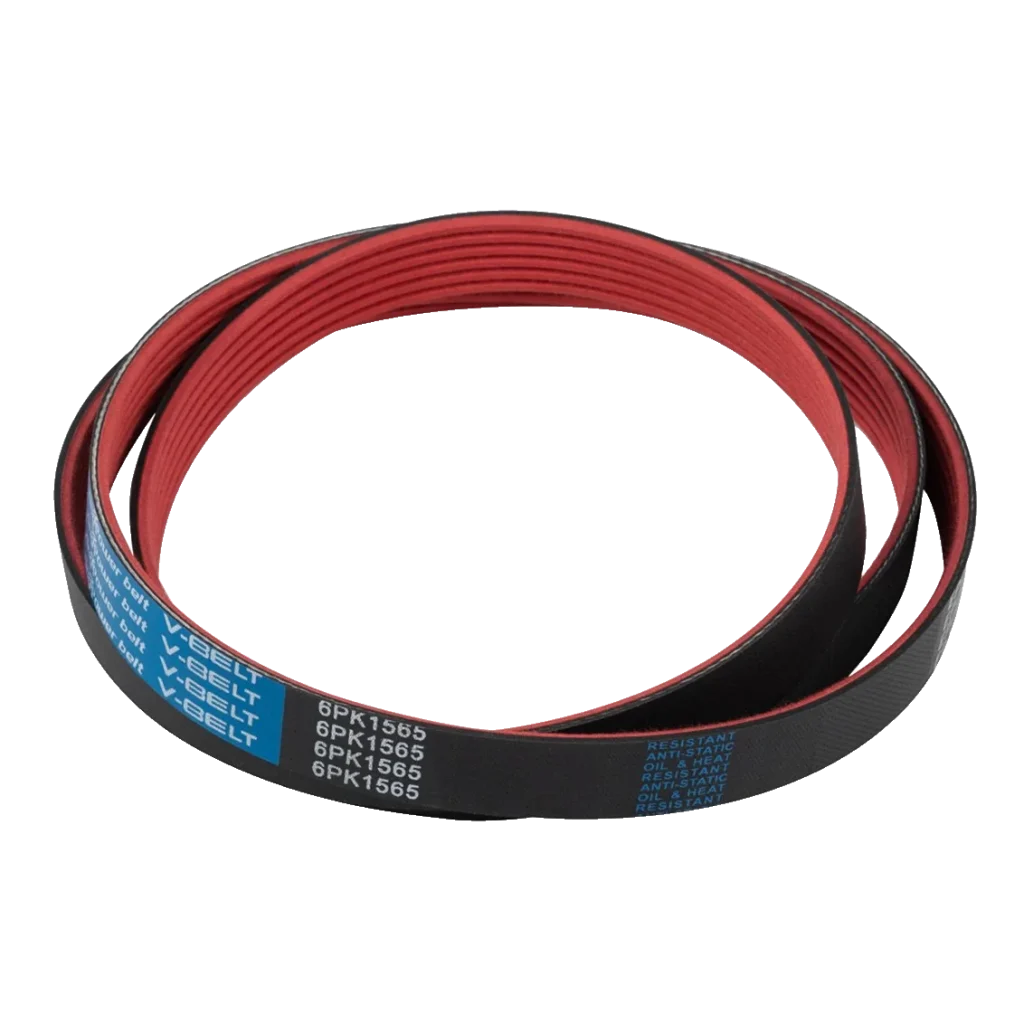
For reference, a typical custom program runs 2 to 12 ribs with lengths from about 400 to 3,000 mm, and accepts custom sizes and logos. See the colored multi-ribbed PK belt product page for a concrete example of the sizing and options available.
How to pick a belt that won't quit early
If you only remember a few things, remember these:
- Confirm the profile and size. PK, PJ, or PL, plus the correct length and rib count. A belt that is the wrong pitch will never seat right.
- Ask how it is built. One-piece molded beats a ground-rib build for life. If a supplier cannot tell you, that is your answer.
- Match the rubber to the heat. EPDM for under-hood and hot industrial use; don't put a belt that hates heat into a hot drive.
- Choose the cord for the job. Polyester for general use, aramid where stretch must be near zero.
- Set the drive up properly. Correct tension, clean and aligned pulleys, right-size the drive. The best belt still fails on a badly set-up machine.
| Build method | Rib edge | Dimensional consistency | Delamination risk | Typical fit on pulley |
|---|---|---|---|---|
| Conventional ground-rib | Cut, rougher | Looser tolerance | Higher (secondary bonds) | Can slip / vibrate |
| One-piece molded | Formed, smooth | Tight, consistent | Low (no secondary bond) | Seats cleanly, low slip |
FAQ
What does PK mean on a belt?
PK is a rib-profile code for multi-ribbed (Poly-V / serpentine) belts. The PK profile has a 3.56 mm rib pitch and about a 40-degree rib angle, and it is the size most used on automotive front-end accessory drives. Smaller PJ and larger PL profiles exist for lighter or heavier loads.
Why do PK belts crack?
Most cracking comes from heat and age: engine-bay heat, ozone, and oil all harden the rubber until it loses flexibility. Add the wrong tension, a worn or misaligned pulley, or simply old age and fine cracks open along the rib edges. A belt that was poorly made with cut rib edges fails sooner because those edges are already the weak spot.
Why does a PK belt slip?
Slippage is usually under-tension, oil or grease on the pulley, worn rib surfaces, misalignment, or asking the drive to carry more load than it was sized for. When the belt slips it runs hotter, which speeds up the very cracking you are trying to avoid.
Does one-piece molding really make a PK belt last longer?
It removes the weak points that cause early failure. In a one-piece molded belt the ribs are formed in the mold in a single cure, so there are no cut rib edges and no secondary bonding layer where delamination starts. The cords sit uniformly in the rubber, the rib dimensions stay consistent, and the belt seats cleanly on the pulley. That consistency is what keeps it from cracking and slipping early.
What temperature can an EPDM PK belt handle?
A standard EPDM compound is good for roughly 120°C of continuous service, with some formulations rated a bit higher for short peaks. If the belt lives in a hot, oily engine bay, EPDM is the usual choice because it resists heat, ozone, and oil far better than natural or neoprene rubber.
Need a PK belt that is actually built to last?
Tell us your profile (PK/J/P/L), rib count, length, and operating temperature, and we will match a one-piece molded EPDM belt with the right cords. Contact us or browse our Poly-V / PK belt range.
Related reading: 2026 transmission belt trends · Rubber vs PU timing belts