
Most belt failures are not accidents. They are the predictable end of a belt that was mis-tensioned, mis-aligned, or judged by the wrong sign. This guide gives workshops and fleet managers the checks that actually catch failures early — and the one habit (spraying belt dressing) that makes them worse.
Inspect the right thing
What you look for depends on the belt material, and this is where most inspections go wrong.
Neoprene belts crack with age. The old rule — three cracks in a three-inch span — still works for them.
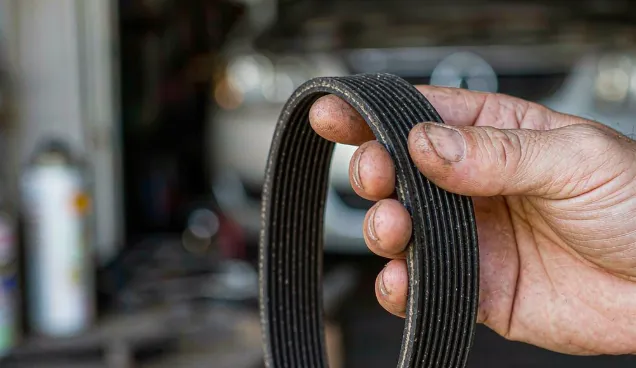
EPDM belts — the standard on most cars since the mid-2000s — resist cracking. They wear by losing rib material, not by cracking. A 100,000-mile EPDM belt can look clean and still be finished. The tell is the gap between ribs widening as the ribs shrink. Gates' own wear gauge reads this: press it into the grooves; if it rocks side to side, the belt is done.
So: stop counting cracks on EPDM. Look at rib height and valley width. As little as 5% rib loss can cause slip, noise, and — in wet conditions — hydroplaning between belt and pulley.
Also check for: glazing (shiny, hardened ribs), missing teeth (timing belts), oil or coolant contamination, fraying, and chunks missing. Any of these means replacement, not adjustment.
Tension: set it, then check it again
Under-tensioned belts slip, heat, and wear fast. Over-tensioned belts load bearings and shafts and shorten everything's life. The right tension is the lowest that holds without slipping under peak load.
Use the Force-Deflection method, not thumb pressure: 1. Measure the span between pulley centers (inches). 2. Target deflection = span ÷ 64. A 32-inch span targets 1/2 inch of deflection. 3. At the span midpoint, press down with a tension tester to that deflection and read the force. 4. Compare to the manufacturer's table for the belt section (new-belt vs retension values).
Then re-check. All belts stretch in the first hours. Re-tension after the first 8–24 hours of run, and inspect tension every 6–12 months thereafter. On a serpentine drive with an automatic tensioner, watch the tensioner arm: if it oscillates or sits at the end of its travel, the tensioner — not the belt — is often the fault.
Alignment: the silent belt killer
Misalignment is the leading cause of premature belt wear that nobody blames on alignment. A misaligned drive wears belts, grooves, and bearings and can make a belt turn over in the groove.
Check it with a straight edge across the pulley faces — it should touch all four points. Target alignment within 0.5° (or 1/10 inch per foot) of center distance for V-belt drives; tighten that to 0.25° (1/16 inch per foot) for synchronous and poly-V drives. Laser tools make this fast and exact.
Fix the cause, not the symptom: bent brackets, worn bushings, a failing crank/harmonic balancer, or a shifted motor base all show up as misalignment.
The belt-dressing mistake
If a belt squeaks, the reflex is to spray belt dressing. Don't.
Belt dressing was made for old neoprene V-belts. Modern EPDM serpentine belts are designed to run dry. The dressing's petroleum solvents soften the rubber, the tacky residue grabs grit like glue, and the grit grinds the ribs and grooves. Belt makers and automakers do not approve it. It hides the real fault — a worn belt, a bad tensioner, or misalignment — while the fault keeps worsening.
What to do instead: - Find the cause (tension, tensioner, alignment, contamination, a failing bearing). - Clean pulley grooves with a nylon brush and isopropyl alcohol — not brake cleaner, which attacks EPDM. - Replace the belt if it is glazed, contaminated, or past interval.
A squeak is data, not an annoyance. Read it.
Replacement intervals that actually matter
| Belt type | When to replace | Notes |
|---|---|---|
| Timing belt | 60,000–100,000 miles or 5–7 years, whichever comes first | Interference engines: a break bends valves. Replace as a kit. |
| Serpentine / poly-V | Start inspecting at 60,000 miles; replace preventively by ~100,000 miles or on any accessory repair | EPDM: judge by wear gauge, not cracks. |
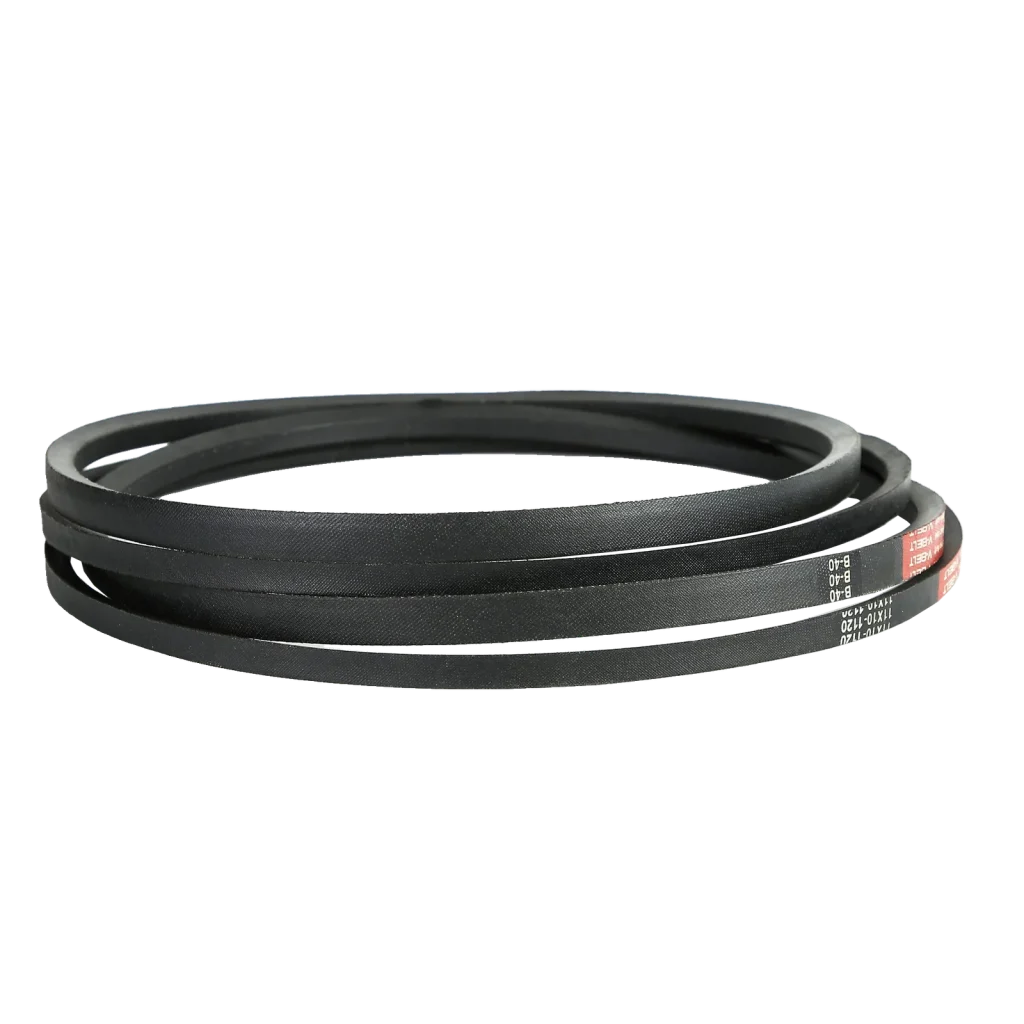
| V-belt (industrial) | On visible wear, glazing, cracking, or when tension won't hold | Inspect every 6–12 months; matched sets only. |
Two points worth repeating: - Time counts as much as miles. Rubber hardens with age. A low-mileage car that is ten years old still needs a fresh timing belt. - A timing belt gives little or no warning. You replace it on the schedule, not when it looks bad — because by the time it looks bad it has already failed.
Common failure modes and what they mean
- Slip (squeal, hot belt, poor accessory output): low tension, contamination, worn tensioner, or glazed pulleys. - Edge wear / one-sided rub: misalignment or a bent sheave. - Bottoming out in grooves / hydroplaning: EPDM rib material loss — replace. - Cracked sidewalls: over-tension, heat, or old neoprene. - Missing teeth (timing): imminent failure — stop the engine. - Belt turnover in groove: severe misalignment, worn pulley, or vibration.
Why it pays to buy application-rated belts
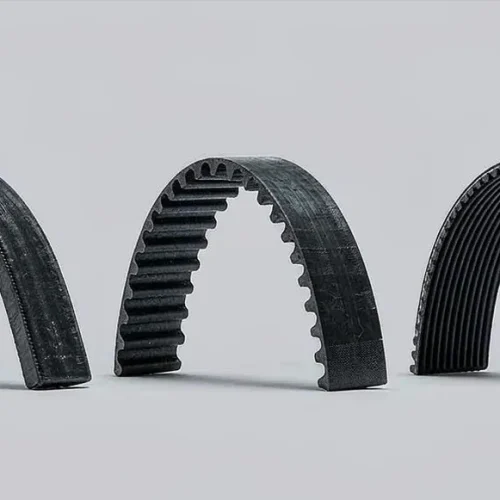
A belt specified for the environment lasts longer than a generic one. For agriculture and construction, Kevlar-reinforced, cut-resistant builds shrug off debris. For under-hood heat, EPDM or HNBR compounds hold up. Buy matched sets, buy by spec, and keep a tension tester in the bay.
KingPower supplies V-belts, timing belts, poly-V belts, and custom drives built to application specs at an IATF 16949 plant — see the product range or tour the factory to see how belts are made and tested.
FAQ
How often should I check belt tension? Re-tension new belts after the first 8–24 run hours, then inspect every 6–12 months. Use a tension tester, not feel.
Is belt dressing ever OK? Only on old neoprene V-belts, and even then it is a short-term cover, not a fix. On modern EPDM belts, no — it damages the belt and hides the fault.
How do I know an EPDM belt is worn if it doesn't crack? Use a wear gauge or compare rib height and the gap between ribs. Worn belts let the gauge rock side to side and show wider valleys.
Can I drive with a slipping belt? Briefly, but a badly slipping or broken belt kills power steering and engine cooling. Address it before any long drive.
Why replace the water pump with the timing belt? They age on the same clock and share labor. Replacing it then avoids stripping the front of the engine again later.
Bottom line
Catch failures with the right inspection (rib loss, not cracks, on EPDM), correct tension via the deflection method, and true alignment. Skip the dressing. Replace on the schedule, not on the symptom. Do those four things and most belt failures stop being surprises.